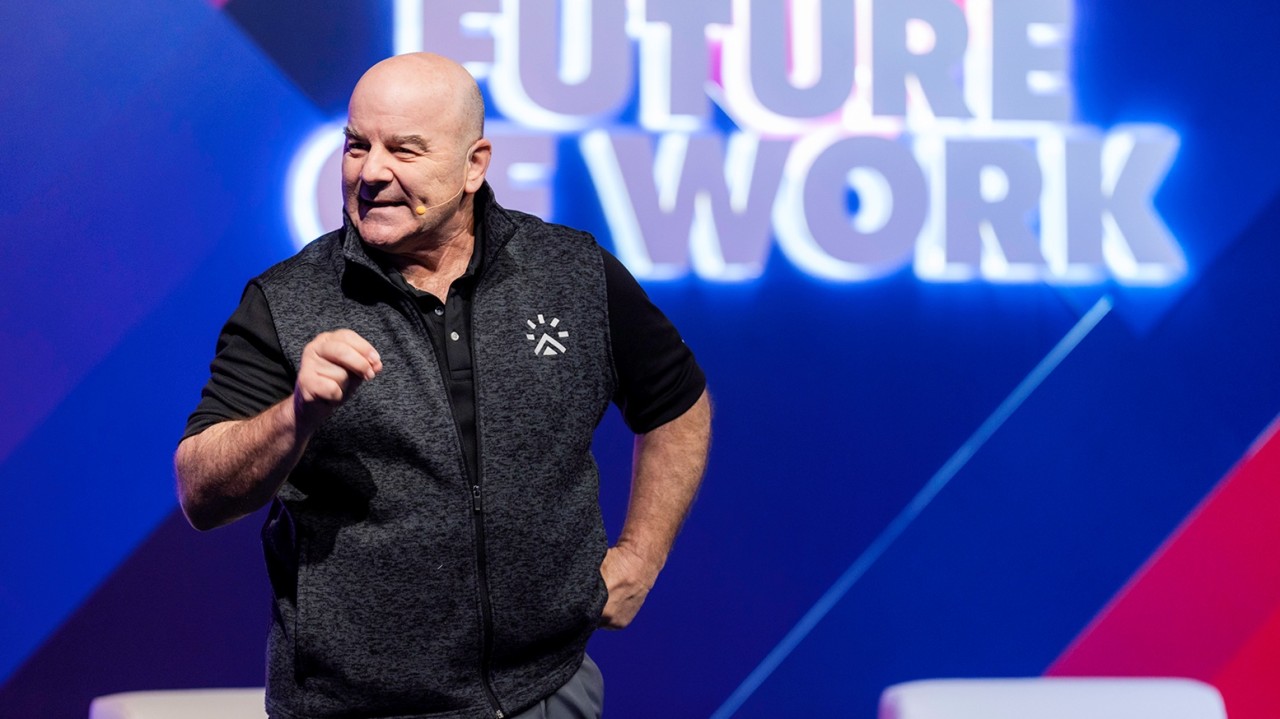

Last month, I had the opportunity to open the Future of Work conference in Vancouver with an industry-specific keynote on culture in construction. Hosted by one of the most progressive mechanical contractors in North America, Pitt Meadows Plumbing, it lived up to its name.
If you know my work, that won’t surprise you. For all the talk about technology, labor disruption, and changing expectations, one message came through loud and clear:
Here are a few themes that stood out to me.
Culture Is No Longer a “Nice to Have”
Construction continues to face labor shortages, recruiting challenges, and increasing pressure on productivity. Yet one pattern continues to emerge in both research and real-world performance. Companies with strong cultures consistently retain people better than those without them, even when paying slightly less.
That should get every leader’s attention.
Culture is no longer a poster on the wall or a leadership talking point. It is a successful business strategy. The companies winning the talent battle are creating environments where people feel valued, trusted, and are connected to something bigger.
Trust in Leadership Still Drives Everything
One of the strongest themes from our ongoing research is that trust in leadership remains the foundation of engagement. Employees who trust leadership are more productive, more loyal, and more willing to contribute discretionary effort.
The challenge? Construction has traditionally leaned toward command-and-control leadership. In many environments, “just get it done” has replaced communication, transparency, and coaching.
That approach may still deliver short-term results, but long term, trust matters.
Leaders who communicate clearly, explain the “why,” and genuinely invest in people create organizations where engagement grows.
The Engagement Paradox
One surprising trend continues to show up: Employees report being generally happy at work, yet many feel underutilized. Think about that for a minute.
At least one-third of your workforce likely has more to give…more ideas, more ownership, more contribution… if can unlock it.
This is where your leadership matters. People want to contribute. Too often, we just fail to tap into their capacity.
The Growing Divide Between Office and Field
Another challenge remains stubbornly persistent: the disconnect between office staff and field operations. Field supervisors continue to report lower confidence in leadership than office teams. Recognition, friendship, communication, and work-life balance consistently lag in the field.
That disconnect affects execution.
It impacts trust. It slows collaboration. It creates unnecessary friction.
Strong leaders act as bridges between departments, generations, and perspectives.
One of the Best Takeaways? “Downtime and Rework.”
One of the most interesting sessions came from Charlie Dunn on the next generation of Lean construction and the human interface required to make it work. I ran out of paper taking notes.
Afterward, I asked him to summarize best-in-class construction in just a few words.
He said:
“Downtime and rework.”
Before you read any further, ask yourself: Do we track it? Do we cost it? Do we even know how bad it is?
For most contractors, the answer is no, no and no.
And Then There Was AI
Of course, no Future of Work conference would be complete without a conversation about AI. I was reminded by Felipe Engineer-Manriquez of a framework shared I learned previously. It stood out to me because it showed how far off so many of us are.
Level 1: Do Existing Work Faster (Productivity) This is where most companies are today — writing emails, summarizing meetings, organizing information, creating first drafts. Useful? Absolutely. But productivity is only the beginning.
Level 2: Create More From Existing Knowledge (Generative) This is where AI becomes a multiplier. Existing ideas become training, content, analysis, and new ways of sharing knowledge. Still familiar. Still manageable.
Level 3: Discover What We Did not Know (Innovation / Discovery) This is where things get interesting. And maybe scary. Not faster work. Not better summaries. New insight. Patterns humans missed. Better decisions. Smarter solutions.
In construction, this could mean understanding why certain firms scale successfully while others stall long before leadership recognizes the problem.
AI starts as an assistant.
Then it becomes a multiplier.
Eventually, it becomes a discovery engine.
My Biggest Takeaway
The future of work in construction will not be won by technology alone. The firms that separate themselves will combine strong culture, trusted leadership, operational discipline, and smart technology adoption.
People still matter. Technology elevates what is possible.